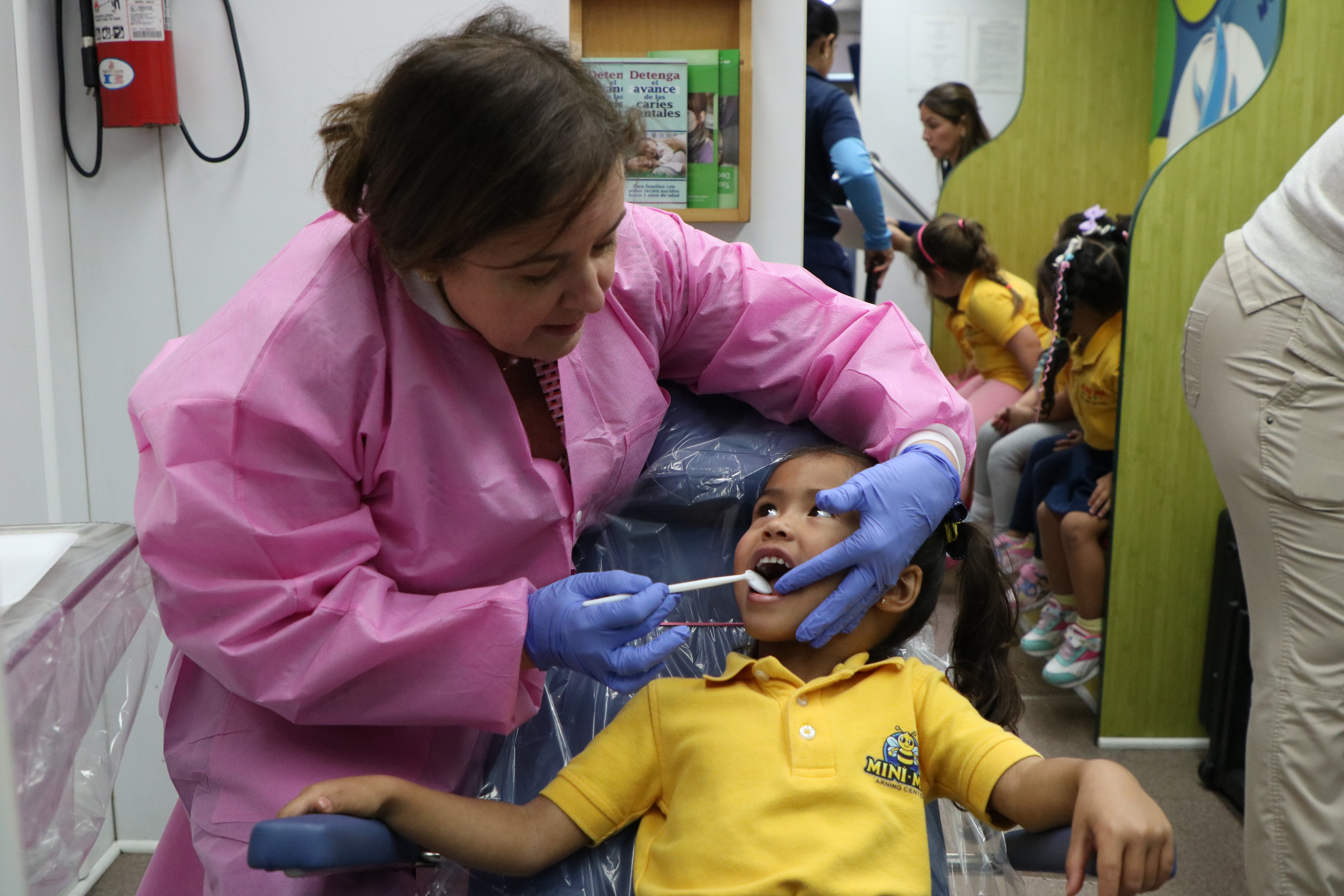
Miami families are always on the go with school, sports, playgrounds, and beach days.
With all that activity, it’s important to keep children’s teeth healthy and safe. Good dental habits and simple safety steps can prevent cavities and painful dental injuries.
There are easy ways families can protect their children’s smiles every day.
Why is dental care important for children?
Baby teeth are important! They help children chew, speak clearly, and hold space for adult teeth. Baby teeth usually begin to erupt around 6 months of age, and most children have a full set of 20 primary teeth by age 3.
Cavities (also called tooth decay) are one of the most common childhood health problems. Cavities can cause pain, infection, trouble eating, and missed school days.
Tooth decay happens when sugar from food and drinks mixes with bacteria in the mouth. This creates acid that damages the teeth. The good news is that cavities are preventable with healthy habits.
When should my child see a dentist?
The American Academy of Pediatrics (AAP) and the American Academy of Pediatric Dentistry recommend that children see a dentist by their first birthday or within 6 months of their first tooth coming in.
After that first visit, children should see the dentist every 6 months for checkups and cleanings. Early visits help prevent problems and teach children that dental care is an important part of staying healthy.
How can we prevent cavities at home?
Healthy habits start early. Here’s what families can do:
- Start fluoride early and brush twice a day.
Fluoride is a natural mineral that strengthens tooth enamel and helps prevent cavities. Children can begin receiving fluoride varnish in the pediatrician’s or dentist’s office as soon as the first tooth erupts.
The American Academy of Pediatrics explains that fluoride varnish is safe and effective for infants and young children.
You can read more here.
Even before your baby’s first tooth appears, it’s important to begin a healthy oral care routine. After each feeding, gently wipe your infant’s gums with a clean, damp washcloth or gauze pad. This helps remove bacteria and gets your baby used to daily oral care. When the first tooth erupts, switch to a soft-bristled toothbrush and begin brushing twice a day using fluoride toothpaste.
At home:
- Brush twice a day (morning and before bed).
- Use fluoride toothpaste.
- Under 3 years: a smear (about the size of a grain of rice)
- 3 years and older: a pea-sized amount
Parents should help or supervise brushing until about age 8, when children usually have better hand control.
- Floss once a day.
Flossing removes food and plaque from between the teeth where a toothbrush can’t reach.
- Limit sugary drinks and snacks and avoid bottles in bed.
Avoid juice, soda, sports drinks, and sticky candy, especially before bedtime. Sugar that stays on the teeth overnight can lead to cavities. Offer water between meals and at night. In Miami’s warm weather, water is always the healthiest choice!
Additionally, putting your child to sleep with a bottle allows the sugars found in formula and even breast milk to linger on the teeth, setting the stage for tooth decay. In fact, many doctors and dentists refer to early cavities as “baby bottle tooth decay.” The American Academy of Pediatrics recommends avoiding bottles at bedtime once teeth erupt and instead establishing a calming bedtime routine that does not involve feeding.
- Use mouthwash at the right age
Mouthwash can help reduce bacteria and strengthen enamel, but it’s not recommended for children under 6 years old because they may swallow it.
- Ages 6–12: Use an alcohol-free, fluoride mouthwash if recommended by a dentist.
- Teens: Can transition to regular fluoride mouthwash.
How can we build healthy dental habits for life?
Brushing your child’s teeth doesn’t have to be a chore. With a little creativity and consistency, it can become a positive part of your family’s daily routine.
- Make it fun. Play a favorite song or use a two-minute timer to turn brushing into a mini dance party.
- Brush together as a family. Children learn by example. When they see parents and siblings brushing daily, it reinforces that it’s an important habit.
- Use positive reinforcement. Praise good brushing and celebrate consistency. A sticker chart or small reward system can help motivate younger children.
- Keep dental visits positive. Speak about the dentist in an encouraging way and avoid using visits as a threat. Early positive experiences build lifelong comfort with dental care.
For more information on dental safety, you can also call the Injury Free Coalition for Kids, a program of Jackson Hospital and University of Miami funded by the Children’s Trust at 305-243-9080 or visit www.injuryfree.org.