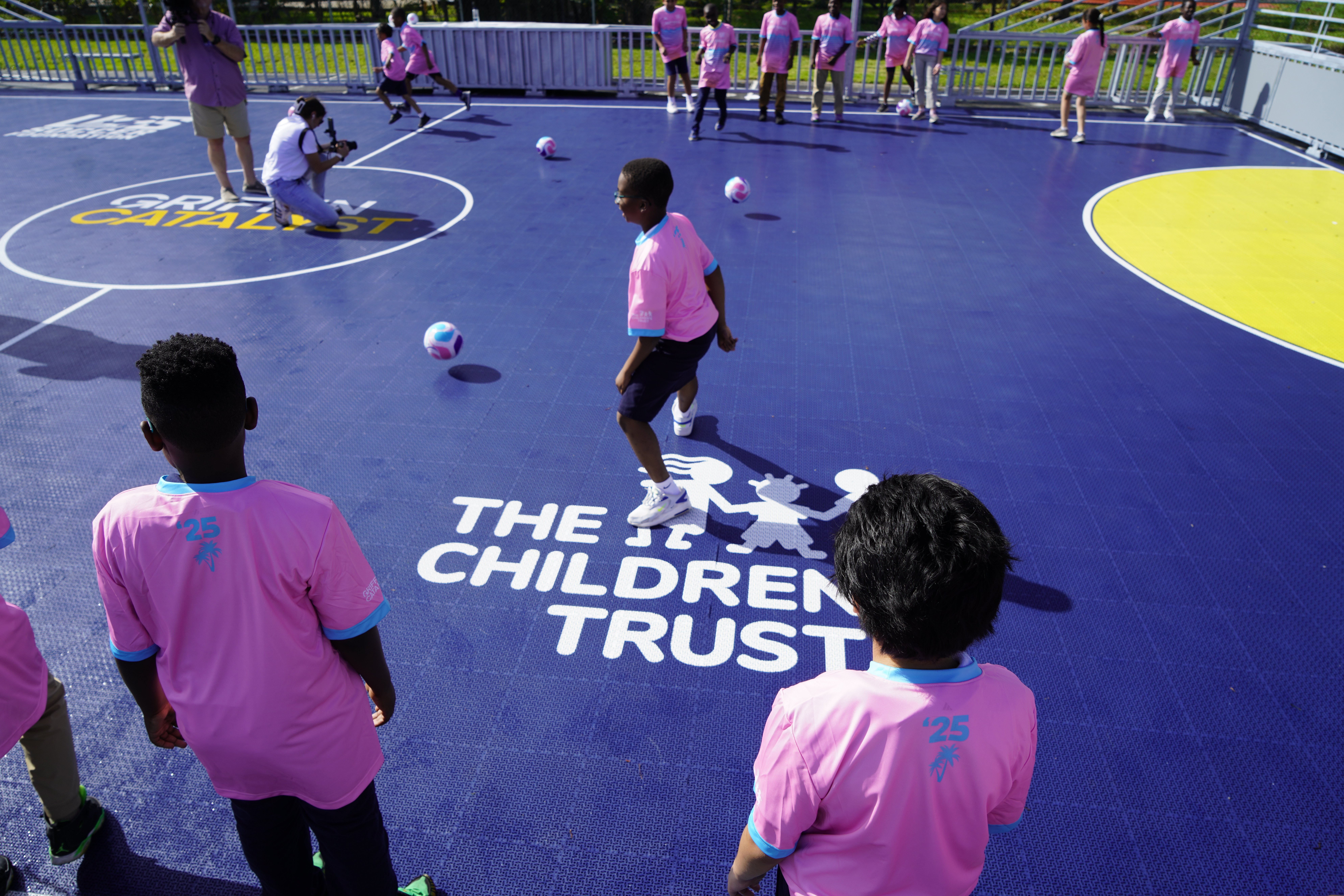
With the 2026 FIFA World Cup only months away the fervor surrounding the event has taken over the state, country, and the world. With seven games being played in Miami-Dade County, the soccer community is ready to celebrate. But for many kids who never had a chance to enjoy all the fun, teamwork, and skills soccer builds, the celebration started two years ago.
In 2024, the Miami-Dade Soccer Initiative was created to increase access to the county’s children and youth that wouldn’t ordinarily be able to play. Although soccer is the most popular sport in the country for youth, there are still real gaps in how many neighborhoods, especially those in low-income communities, have access to organized play. That’s where Miami-Dade Soccer Initiative comes into play.
Miami-Dade County’s deep cultural connection to soccer has helped fuel the initiative’s rapid progress. From neighborhoods where the sport is known as fútbol, futebol, calcio, or simply soccer, generations of families have embraced the game as both recreation and identity. Community leaders say the initiative aims to ensure that passion translates into opportunity for children across the county, regardless of income or location.
The initiative is built on a partnership that includes Miami-Dade County, The Children’s Trust, the U.S. Soccer Foundation, Griffin Catalyst, Miami-Dade County Public Schools, and the Miami 2026 World Cup Host Committee. Together, the organizations are working to construct 50 soccer mini-pitches across the county by the time the World Cup arrives, with most located in underserved communities. The pitches are paired with free programming, including the U.S. Soccer Foundation’s “Soccer for Success” and the local Just Ball League, designed to promote physical activity, teamwork, and leadership development.
The Children’s Trust, which has partnered with the U.S. Soccer Foundation since 2018, plays a central role in funding programming and helping identify communities with the greatest need. Trust officials say soccer provides more than exercise — it helps young people build confidence, friendships, and emotional resilience while giving them a safe, structured environment after school.
A milestone in the effort occurred in March when community leaders gathered at Oak Grove Elementary School to celebrate the addition of 25 new soccer mini-pitches at school sites throughout the county. The event included Miami-Dade Mayor Daniella Levine Cava, Schools Superintendent Jose Dotres, representatives from Griffin Catalyst and the U.S. Soccer Foundation, Children’s Trust President and CEO James Haj, and members of the Miami World Cup Host Committee. Students participated in a ceremonial kickoff to highlight the initiative’s growing reach.
Organizers say the mini-pitch model has proven effective because it transforms smaller spaces at schools and parks into safe, accessible places to play. By placing the fields directly in neighborhoods, transportation and cost barriers that often prevent participation are reduced or eliminated.
The long-term vision extends well beyond the World Cup. By 2030, partners hope the Miami-Dade Soccer Initiative will positively impact the physical, social, and emotional well-being of more than 36,000 children. Community leaders also see the investment as part of the World Cup’s lasting legacy in South Florida — one measured not only in international matches played in Miami-Dade Stadium, but in the daily lives of children kicking a ball on neighborhood fields.
As the countdown to June continues, the initiative reflects how Miami-Dade’s love of the world’s most popular sport is being transformed into something lasting — an opportunity for thousands of young residents to experience the joy of the game and the life lessons it brings.